Zimbabwe Chase a 3-0 Sweep, Bangladesh Chase Pride: Reading the 3rd ODI at Harare for Fantasy Captains
Zimbabwe hold a 2-0 lead going into the third and final ODI of Bangladesh's 2026 tour at Harare Sports Club on 11 July, with the first ball scheduled for 1:00 PM IST. The series is gone; the clean sweep is not. That is the frame fantasy desks have to read through before locking a captain pick on Saturday afternoon.
Published 10 July 2026 by the IPL Big Win editorial desk.
Zimbabwe have already won the series. A 13-run win in the 2nd ODI on the back of Ben Curran's 111 off 135 balls, plus Richard Ngarava's 3 for 55 and Blessing Muzarabani's 2 for 33, gave them an unassailable 2-0 lead. Bangladesh's consolation card is the only thing left to play for in the third match, and that single fact rearranges most of the captaincy math the fantasy desks had built across the first two games.
Dead rubbers at the back end of a bilateral tour tend to do two things to a fantasy field. First, they compress the ownership distribution at the top because public captaincy follows team identity rather than form. Second, they widen the differential pool further down the order because the bowling captain of the dominant side tends to be rested, and the replacement almost never gets picked up at the same ownership rate. The 3rd ODI preview from the original publisher flagged Brad Evans as the captaincy pick for that reason; the rest of this read works through what he brings, what the Bangladesh batting order does next, and which Harare numbers actually move the fantasy needle.
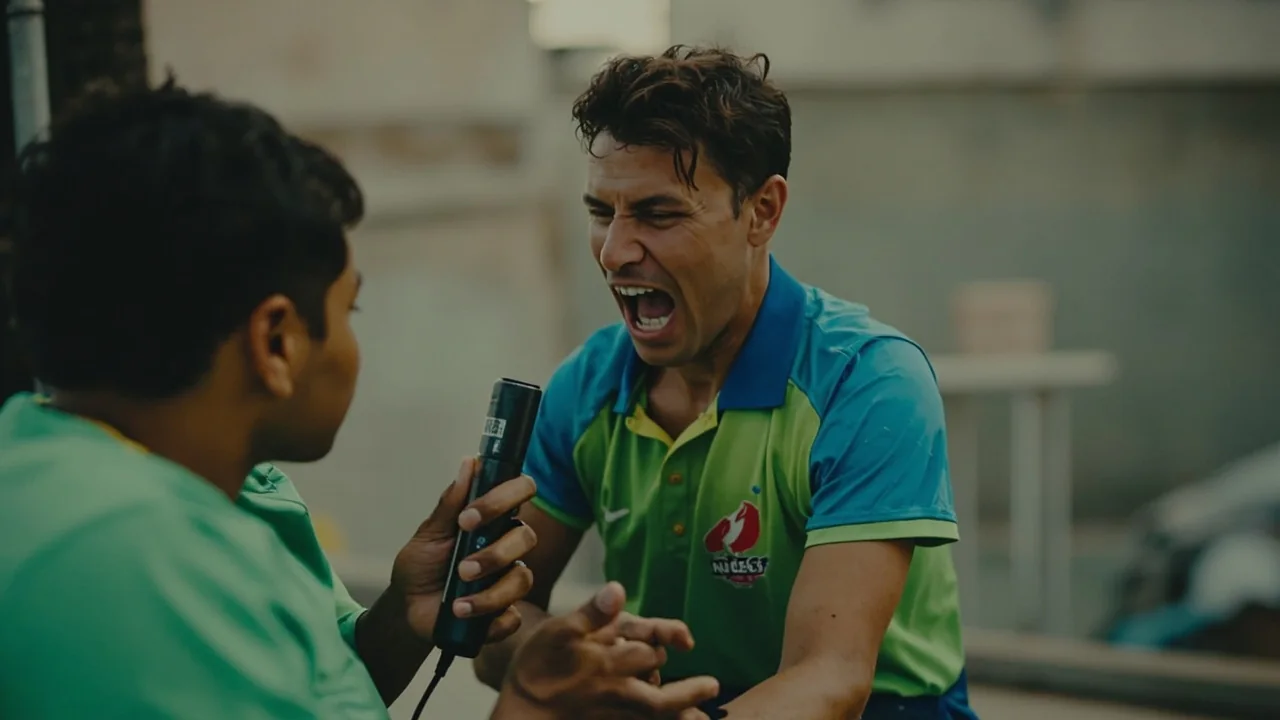
A 13-run win built on Curran's century and Ngarava's spell
Zimbabwe batted first in the 2nd ODI and posted 247 for 6 in their 50 overs. Ben Curran carried the innings with 111 off 135 balls and was named Player of the Match. Curran's knock is the kind of innings that does not happen in isolation. It is the kind of innings that happens when the top order has given him a foundation and the middle order has not thrown away the platform. That context matters for the 3rd ODI, because it tells fantasy desks that the Zimbabwe batting order has a stable middle, and that the role Curran plays is repeatable rather than one-off.
Ngarava and Muzarabani then took the chase apart. Ngarava finished with 3 for 55, Muzarabani with 2 for 33. Bangladesh's chase had started well — Tanzid Hasan made 57 and Tawhid Hridoy 60, and the pair put on 116 — but the partnership broke at 169 for 2 and the innings collapsed from there. Bangladesh were bowled out for 234 in 48.1 overs, 13 runs short, having slipped from 169 for 2 to 176 for 5 before the lower order could not recover the boundary count.
The collapse is the single most useful data point for the 3rd ODI fantasy read. Bangladesh's middle order ran out of options once the second wicket fell, which means the bowlers who took that fifth wicket — Ngarava, Muzarabani, and the supporting cast — are doing something that is not just compatible with the surface but actively exploitative of Bangladesh's batting depth. Brad Evans, who scored an unbeaten 58 at the back end of Zimbabwe's innings and is the leading wicket-taker of the series with 5 wickets at the time of writing, sits in exactly that exploitative zone.
For the fantasy desk, the implication is straightforward. The collapse tells you the captaincy case for the Zimbabwe bowling unit is built on a verified pattern, not on a single performance. Curran's century tells you the batting captaincy case sits with the top order, not with the lower order. Both reads hold for the 3rd ODI regardless of whether Bangladesh change the batting order or the bowling unit for the consolation fixture.
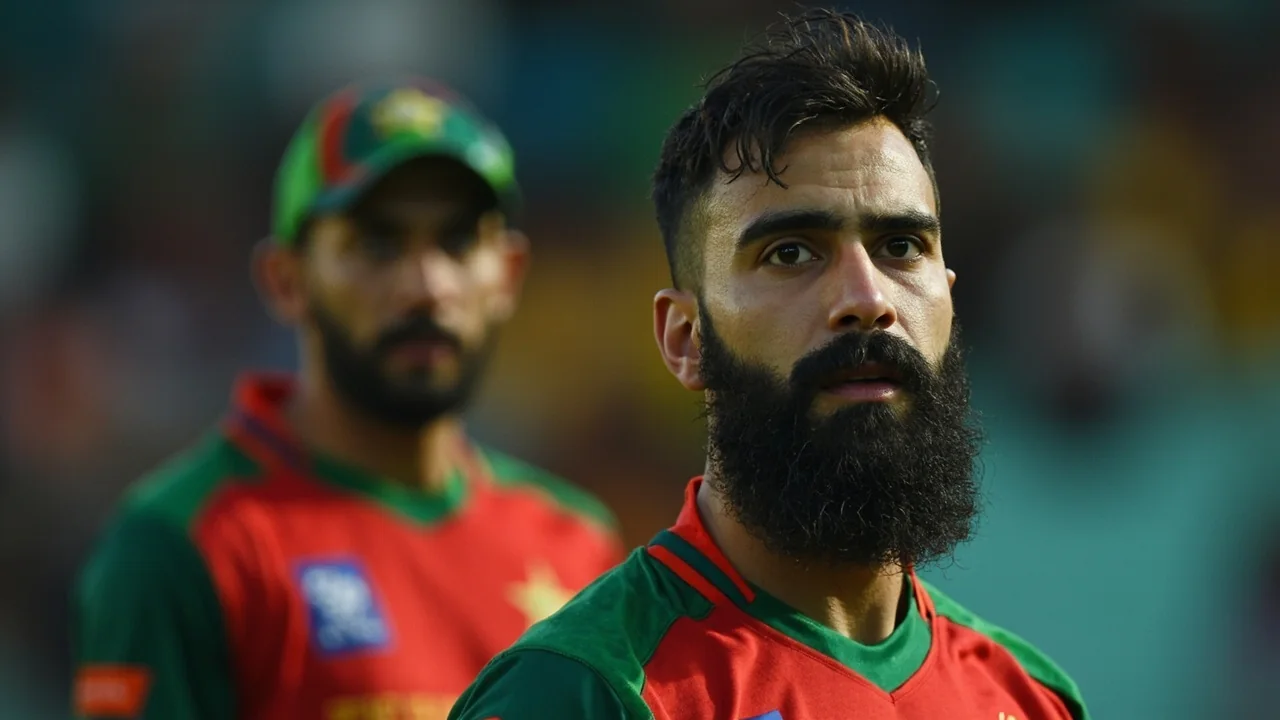
Harare in mid-July: cool mornings, dry afternoons, batting-friendly surface
Harare in mid-July sits in the Zimbabwe high dry season. Morning temperatures on match day typically start around 11 to 13 degrees Celsius and peak in the low twenties in the afternoon. There is little humidity, no realistic rain threat, and the outfield is dry. Those conditions matter for fantasy captaincy because they keep the ball coming onto the bat without a dew-driven swing or seam phase at the back end of the innings. The toss still matters — chasing at Harare carries a small advantage in day-night fixtures when dew arrives after sunset — but in an afternoon start like the 1:00 PM IST slot, the surface reads more evenly across both innings.
The pitch itself at Harare Sports Club has tended to be a batting surface with enough carry for the seamers early on. Spinners have not been the dominant wicket-taking option in this series, with the pace bowlers taking the bulk of the wickets in the first two ODIs. That tilts the captaincy calculus slightly toward the seam-bowling all-rounders and the top-order batters who can capitalise on the powerplay. A differential captaincy pick that comes out of this surface is the Zimbabwe pace-bowling all-rounder; an aggressive captaincy pick is one of the Bangladesh top-order batters who needs a statement innings.
Weather forecasts for Harare on 11 July suggest clear skies and a light easterly breeze through the afternoon. That is consistent with the typical match-day pattern at this venue in midwinter and gives fantasy captains a clean read on the playing conditions. No rain interruption, no significant dew, no wind-driven swing phase. That is what makes the form and matchup data the deciding factor rather than the conditions overlay.
Predicted XIs and what each side is likely to change
The Zimbabwe probable XI, as listed in the source preview, is the unit that has won the first two matches: Brian Bennett, Ben Curran, Brendan Taylor, Sikandar Raza, Sean Williams, Clive Madande, Brad Evans, Wellington Masakadza, Richard Ngarava, Blessing Muzarabani, Trevor Gwandu. The bowling depth runs through Ngarava, Muzarabani, Evans and Masakadza, with Williams and Raza offering spin as the innings progresses. The only realistic change is a rest day for one of the senior quicks if Zimbabwe want to manage workload ahead of the next international window — and even that is unlikely for a dead rubber they want to win 3-0.
The Bangladesh probable XI is the squad that has played the first two ODIs: Tanzid Hasan, Soumya Sarkar, Najmul Hossain Shanto, Mushfiqur Rahim, Mahmudullah, Tawhid Hridoy, Mehidy Hasan Miraz, Taskin Ahmed, Hasan Mahmud, Mustafizur Rahman, Shoriful Islam. Bangladesh have two reasons to tinker. The first is the search for a consolation win and the second is the audition for the slots that will need to be filled when the senior pace bowlers return from injury for the next assignment. Fantasy desks should expect at least one change in the bowling unit and a possible promotion in the batting order.
The key fantasy takeaway from the two XIs is that both batting orders are long enough to absorb an early wicket and short enough that one big partnership changes the captaincy calculus. That is what the 2nd ODI showed: Bangladesh were 169 for 2 and then 176 for 5 inside five overs, and the rest of the chase could not recover. Zimbabwe's batting order is similarly structured — Curran's century was the platform, and the rest of the card batted around it. Both captaincy picks for the 3rd ODI therefore sit in the top five rather than the lower order.
Brad Evans as the verified captaincy pick, with the differential sitting in the Bangladesh top order
The safe captaincy pick for the 3rd ODI is Brad Evans. He is the leading wicket-taker of the series with 5 wickets at the time of the preview, and he scored an unbeaten 58 at the back end of the 2nd ODI innings to confirm he can contribute with the bat when the situation demands. An all-rounder who sits at the top of both the wicket chart and the lower-order batting contributions is the kind of captain pick that protects a fantasy side from a flat night at the office on a batting-friendly Harare surface. The 2x multiplier on his wicket points alone is enough to lift a 30-point night into a 60-point fantasy score.
The aggressive captaincy pick is one of the Bangladesh top-order batters — most likely Tanzid Hasan or Najmul Hossain Shanto. The logic is the inverse of the safe pick. Bangladesh need a statement innings to leave the tour with a consolation win, and that kind of motivation typically shows up at the top of the order. Tanzid's 57 in the 2nd ODI chase is the most recent proof that he can find the boundary against this Zimbabwe attack; if he replicates the role and goes on, the 2x captaincy multiplier on a 70-plus score becomes the kind of fantasy ceiling that wins grand leagues.
The differential captaincy pick sits in the lower-middle order on either side. Sean Williams and Sikandar Raza are the Zimbabwe spin-bowling all-rounders who have not been the public captaincy focus but who have the all-round ceiling to break a contest if the top order falls early. Mahmudullah and Mehidy Hasan Miraz are the Bangladesh equivalents. None of those four will be heavily owned if the public captaincy distribution follows the wicket-taker and the top-order batters — which is exactly the gap a grand-league side needs. The wider captaincy distribution on a dead rubber is what makes this fixture worth a slot in the rotation, and our weekly captain picks and differential watch coverage has been tracking exactly these matchup-driven decisions through the season.
Where the dead-rubber trap sits in the fantasy field
The captaincy trap in dead rubbers almost always sits in two places. The first is the popular batter who scored heavily in the first match and is now priced at full credit but playing on a flatter pitch with less motivation to attack. The second is the strike bowler whose workload is being managed for the next series and who may end up with two overs instead of four. In the 3rd ODI at Harare, both traps are visible.
Bangladesh's Towhid Hridoy is a useful illustration. Hridoy scored 60 in the 2nd ODI and added 116 with Tanzid Hasan, but the partnership was the high point of his innings and the rest of the chase collapsed. In a consolation fixture with Bangladesh looking for a top-order foundation, Hridoy's role shifts to the middle-overs accumulator and his ceiling drops. Fantasy captaincy desks who lock him in on the strength of the 2nd ODI score alone are pricing in a repeat performance that the matchup does not support.
Zimbabwe's Wellington Masakadza is the second example. Masakadza has been a steady part of the bowling unit through the first two matches, but his wicket count is lower than the headline bowlers and his batting role is lower-order. In a dead rubber, he is the kind of pick that ends up at three or four overs rather than the full ten, and that compresses his fantasy ceiling. The captaincy desks who pick him on team identity alone are paying full credit for a partial role.
The general rule for captaincy in dead rubbers is to follow the verified wicket-taking pattern and the verified batting form into the third match, rather than to extrapolate from the second-match scorecard. The pattern is the data; the scorecard is the noise.
What the Bangladesh-Zimbabwe ODI record tells the fantasy desk
Bangladesh and Zimbabwe have played enough ODIs against each other that the head-to-head record carries some weight, even when the squads are not identical. Zimbabwe have traditionally been a tough opponent at home in the 50-over format, and Bangladesh's away record in southern Africa has been inconsistent. The 2-0 lead Zimbabwe hold going into the 3rd ODI is consistent with that pattern.
The head-to-head is more useful as a sanity check on the captaincy read than as a primary input. The 2nd ODI scorecard already gives fantasy desks the form baseline; the head-to-head confirms that the form baseline is consistent with the long-term pattern. When the two align, the captaincy decision becomes easier because the differential candidates sit in a smaller, more verifiable pool.
What the head-to-head does not do is predict the 3rd ODI toss call. That decision belongs to the two captains on Saturday afternoon, and the fantasy desk has to wait for it before locking the captaincy multiplier. The Harare numbers suggest both captains will lean towards bat if they win the toss — the surface reads evenly across both innings and the bowling-friendly first ten overs are easier to absorb than a chasing collapse — but that is a tendency, not a guarantee.
What this fixture actually decides for fantasy captaincy
The 3rd ODI at Harare Sports Club on 11 July 2026 is a dead rubber on the scoreboard but a live captaincy question for fantasy desks. Zimbabwe have the form, the bowling depth, and the home surface that tilts the matchup in their favour. Bangladesh have the motivation of a consolation win and the top-order batters who need a statement innings to end the tour on a high note. The fantasy desk has to read through both stories before locking a captain pick.
The safe captain is Brad Evans. The aggressive captain is one of the Bangladesh top-order batters. The grand-league captain sits in the lower-middle order on either side and depends on the captaincy distribution being narrower than usual. The most useful thing to do between now and the toss is to lock the team sheet, watch the captaincy call, and pick the multiplier around that decision rather than against it. The form baseline is verified; the toss gives the venue multiplier; the rest is matchup.