Vaibhav Sooryavanshi Returns from a Quiet England Tour with a Loud Zimbabwe Audition
Vaibhav Sooryavanshi walked out for his maiden T20I innings against England, took strike to Jofra Archer, and swept the first delivery he faced clean over the leg side for six. It was the loudest single moment of a tour that, by the numbers, never really got louder than that. Three innings later, with 42 runs to his name at an average of 14 and never more than ten balls faced in any single stay, the teenager heads home to prepare for India's three-match T20I series in Zimbabwe — and a much louder audition for the role that India's white-ball think-tank has been quietly sketching out for him.
Published 23 July 2026 by the IPL Big Win editorial desk.
Sooryavanshi became India's youngest men's international cricketer at 15 years and 99 days when he debuted in the second T20I of the 2026 England series. That record is the headline. Everything else from this tour — the boundary off Archer, the three low scores, the replacement by Sanju Samson for the final match — is the quieter story that India's selectors and fantasy captaincy desks will be working through before the team reassembles.
The tension is a familiar one in Indian cricket. A domestic superstar arrives with a 2026 IPL Orange Cap, an MVP award, an Emerging Player trophy and a 237-plus strike rate, then finds international bowling a different speed, a different length and a different field. Sooryavanshi felt that gap in real time across three innings. He also knows the gap closes, because it has closed for every other young Indian opener of his generation.
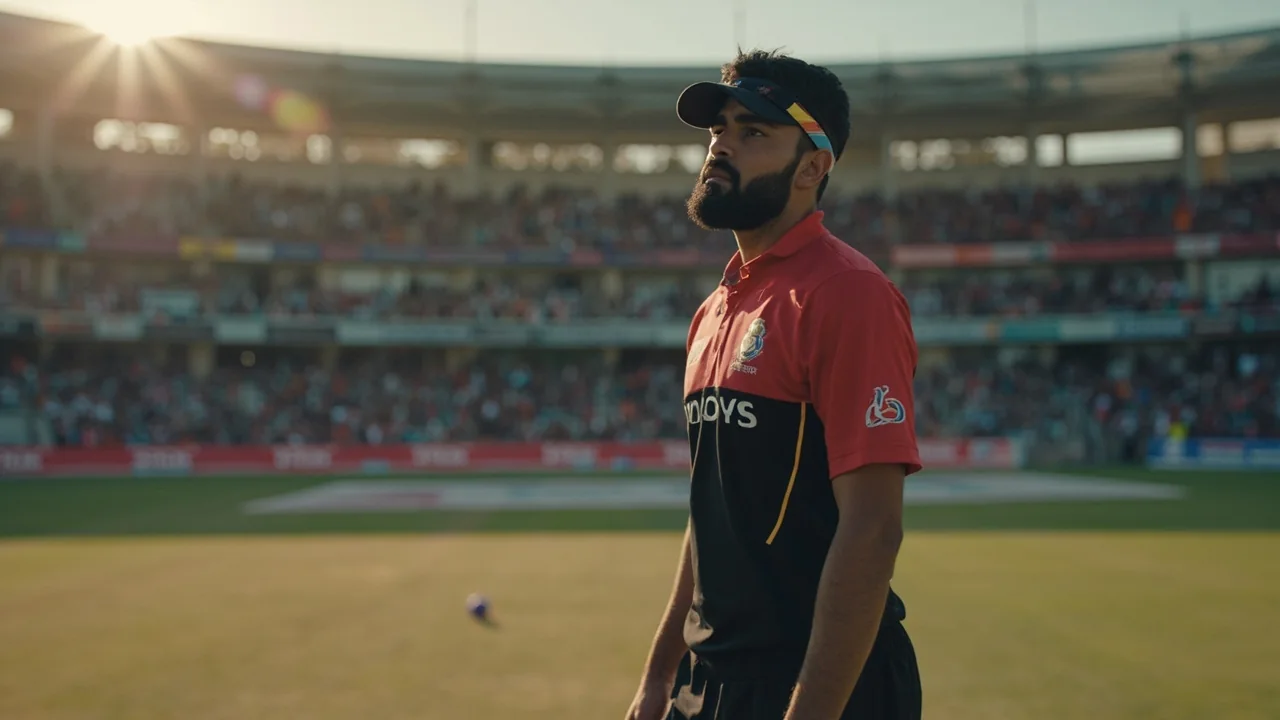
Three innings, 42 runs, no innings longer than ten balls
Sooryavanshi's T20I tour of England came in three discrete spells. He scored 14 in the second match of the series, 13 in the third, and 15 in the fourth. None of those innings stretched past the tenth delivery he faced. The combined return — 42 runs at an average of 14 across three innings, with a single six and only a handful of boundaries in between — tells a specific story: he was not outclassed, he was out-tempoed.
In Twenty20 cricket, ten balls is the boundary between a settling-in knock and a match-shaping one. India's middle order and finishers were set up to launch once the openers had burned four or five overs. Sooryavanshi was getting to the crease early but burning through his allocation fast, which meant India's powerplay scoring rate climbed while the average partnership length dropped. It is the kind of pattern that does not always show up on a scorecard but shows up clearly in win-probability charts.
The decision to replace him with Sanju Samson for the fifth and final T20I of the England series was not a punishment. It was a recalibration. India had the series result to manage and a longer-term opening combination to bed in. Bringing Samson back into the XI gave the middle order a player who can hold an end while a younger opener plays his natural game at the other.
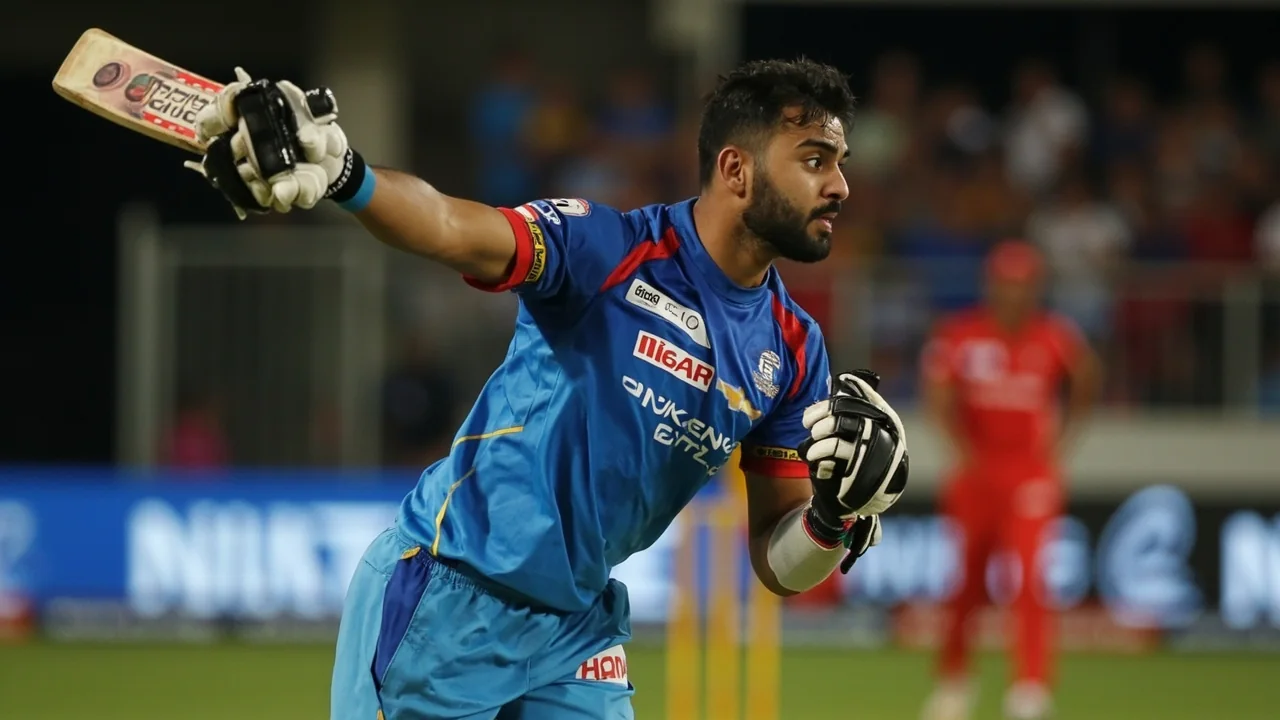
Why an England tour is the hardest possible first assignment
Sooryavanshi did not draw a soft fixture. England's white-ball attack at home in 2026 featured Archer, Mark Wood, Sam Curran, Adil Rashid and Liam Livingstone — a group that asks very different questions of an opener than the IPL does. The IPL pitches he dominated in 2026 were largely flat, with short straight boundaries and dew settling early in the second innings. English conditions offered swing, seam movement off the surface, and square boundaries that punish horizontal-bat shots unless the batter is in complete control of the contact.
There is a deeper reason this tour is harder than it looks. Most Indian openers who have come in as IPL sensations — KL Rahul, Ishan Kishan, even a young Shubman Gill — needed a full home season to translate their white-ball hitting into overseas conditions. England's seam-and-swing template, in particular, demands an opener who can leave the ball on off stump for long stretches. Sooryavanshi's game is built on attacking the off side. That is the tension England's bowlers were probing.
The single six off Archer, hit off the very first delivery of his international career, is worth pausing on. It is not a small feat. Archer is bowling at 145 kph with a high release point and a yorker-hunting length. Sweeping him for six on debut is the kind of cricket-brain moment selectors remember long after the averages have settled. It is also exactly the kind of shot that gets bowlers thinking about how to set him up next time — and England's bowlers did think about it.
The IPL 2026 evidence behind the hype
It is easy to forget, looking at the England numbers, that Sooryavanshi was the dominant young batter in IPL 2026. He finished the season with 776 runs in 16 innings, a strike rate above 237, and 72 sixes. He took home the Orange Cap, the Most Valuable Player award and the Emerging Player award — a triple that puts him in a small group of teenagers who have ever run away with the headline trophies of an IPL season.
More relevant to the India question is the shape of that run. Sooryavanshi did not pad his tally with one or two flat-track hundreds. He scored against pace and spin, in the powerplay and at the death, against Mumbai, Bengaluru, Chennai and Hyderabad. He won matches his team had no business winning on paper. That kind of repeatable, high-leverage hitting is precisely what India's selectors have been trying to find at the top of the order since the post-2024 reset.
Before the IPL, he had already represented India at the 2026 ICC Under-19 World Cup, which India won at venues in Harare. So by the time the England tour began, he was not a teenager arriving from nowhere. He was a teenager arriving with a U-19 world title, an IPL triple-crown, and a domestic season's worth of evidence that his power game worked against quality attacks. The England tour was the first test of whether the same game worked at a third tier of difficulty.
Why the Zimbabwe series is built for exactly this reset
India's three-match T20I series in Zimbabwe is, on paper, a lower-stress assignment than the England tour. The Zimbabwean attack has fewer 145 kph operators and fewer variations aimed at the 15-year-old's specific weaknesses. That gives Sooryavanshi a chance to bat through the powerplay, see off the new ball, and build the kind of innings that produces 30 or 40 runs from 20-plus balls instead of 15 from eight.
There is also a structural signal embedded in the squad announcement. Samson has been left out of the Zimbabwe squad. With India likely to pair Sooryavanshi at the top with Abhishek Sharma — the left-handed aggressor who has been the most consistent T20I opener in the side since late 2024 — the team is signalling that this series is specifically an audition for the long-term opening combination. There is no senior opener to displace him and no cushion if the team wants to rotate back to the tried-and-tested middle order.
For fantasy captaincy desks, the read is more practical. Sooryavanshi's price in the upcoming fantasy windows will almost certainly be lower than his ceiling, because the England averages are still fresh in the public mind. If he plays two of the three Zimbabwe matches at the top and produces a single anchor innings of 35-plus, his ownership jumps and his captaincy ceiling rises. The smart move, in other words, is to track the first T20I carefully and decide on the captaincy call before the market catches up.
What Sooryavanshi's reset means for IPL 2026 fantasy squads
The India T20I window does not directly map onto IPL fantasy points. It does, however, shape how openers are priced and selected when the IPL auction cycle resumes for 2027. Players who carry an international T20I role into an IPL season tend to come back with refreshed confidence, more boundary-hitting cues, and a better sense of which matchups to attack. Sooryavanshi is a candidate for exactly that uplift, which makes the Zimbabwe series quietly important even for fantasy players who do not back Indian cricket separately.
There is a subtler read. Sooryavanshi's IPL franchise is built around an aggressive powerplay template that depends on the new batter getting on strike early. If India re-uses that same template — left-right combination at the top, both batters attacking the powerplay, no consolidation phase until the seventh over — Sooryavanshi returns to the IPL auction with a sharper role definition than he had when he left. That makes his 2027 auction value more stable and his 2026 end-of-season captaincy ceiling higher for the fantasy players who tracked the tour closely.
Our editorial coverage of captain picks and tournament trends tracks the overlap between India's white-ball windows and the IPL fantasy cycle week to week. The Sooryavanshi file is one of the more useful ones to watch, because the gap between his IPL ceiling and his international floor is exactly the kind of differential that pays off in grand-league contests when the ownership has not caught up to the underlying form.
Three things to watch between now and the Zimbabwe series opener
First, watch how India structures its powerplay in the first T20I. If Abhishek Sharma takes the right-hand bowlers and Sooryavanshi takes the left-arm spinner early, that is a deliberate left-right matchup plan being put in place. If the order flips match to match, the team is still auditioning and the role is genuinely up for grabs.
Second, watch Sooryavanshi's balls-faced per dismissal. A return to double-digit balls faced in two of the three Zimbabwe innings would be a meaningful step. Sooryavanshi crossing the 18-ball threshold in a single T20I knock would be the kind of signal that the selectors are looking for before the Asia Cup window later this year.
Third, watch the way India's middle order responds. If Sanju Samson-style middle-overs consolidation is the template, Sooryavanshi's role at the top has to be even more aggressive. If the team instead trusts him to play long innings, his strike rate will drop and his average will rise — and both signals will reshape his IPL auction price in the months that follow.
What the England tour actually told us about Sooryavanshi
The England tour did not expose a weakness in Sooryavanshi's game. It exposed a gap between two different versions of the same player. There is the IPL version, built on flat pitches, short boundaries and 237-plus strike rates. There is the international version, still being assembled under tougher conditions and against bowlers who have spent a decade setting up young Indian openers. The gap between those two versions is where the next year of his career will be spent.
Zimbabwe is the first assignment with a chance to narrow that gap. If he plays two long innings there, the international version catches up. If he plays the way he did in England — fast, bright, short — the IPL version carries the headline for another season while the team waits for the rest to come. Either way, the fantasy desks that watch this series closely will have an edge on those who only watch the headline numbers.