Powerplay stats: scoring ceiling by role
Powerplay scoring shapes for openers, top-order batsmen, and pace bowlers.
What the powerplay is
The powerplay is the first six overs of the innings: overs 1-6. Field restrictions limit the bowling side to 2 fielders outside the 30-yard circle. The powerplay rewards aggressive batting — fast outfield, few catchers, hard new ball. The scoring shape is high ceiling and high variance.
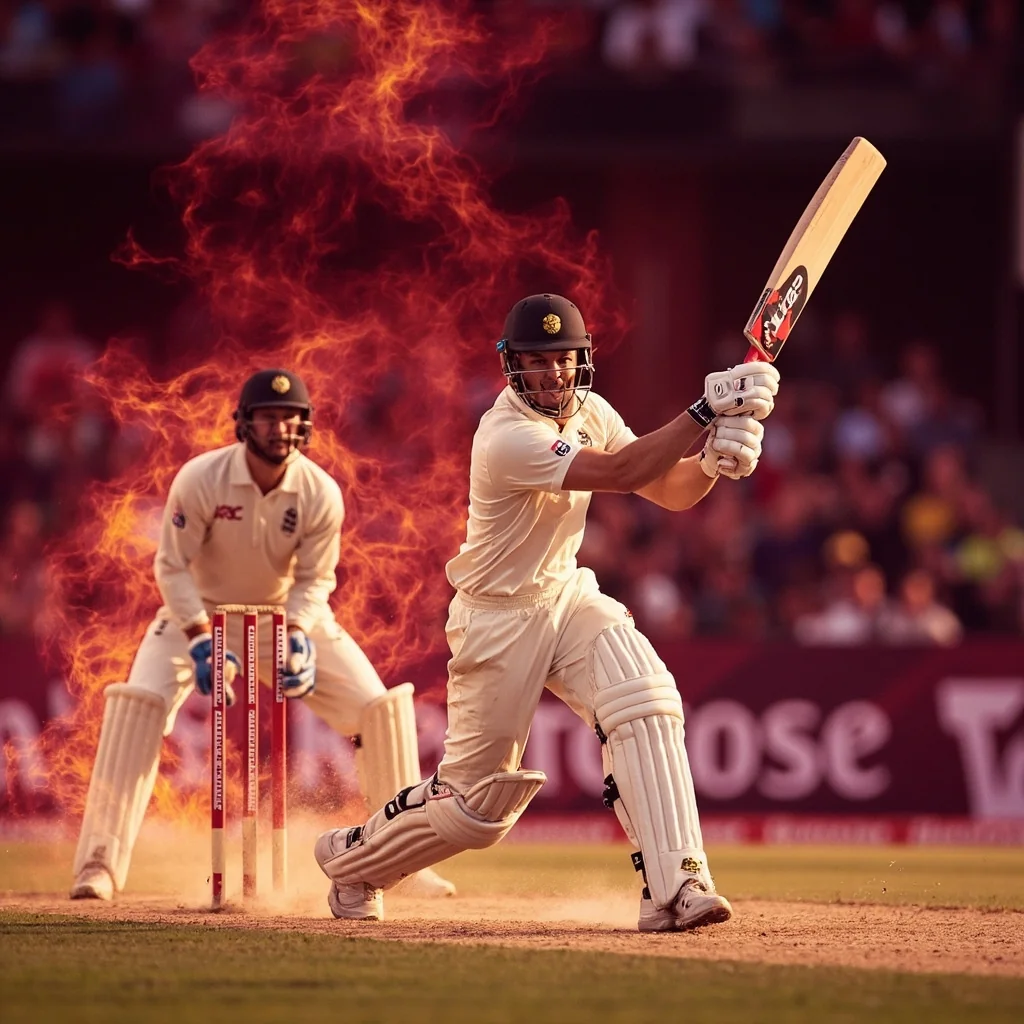
Powerplay scoring rates
Average powerplay scoring rate is 9-10 runs per over across IPL teams. The strongest powerplay units score 10-12 RPO (60-72 runs in 6 overs). The weakest score 6-7 RPO (36-42 runs). The differential between teams is 4-5 RPO — significant for fantasy scoring.

Powerplay hits in cricket match
Opener ceiling in powerplay
An opener in a strong powerplay unit scores 35-50 runs in the powerplay on a flat track. Boundary frequency is high: 4-6 fours + 1-2 sixes. The fantasy point ceiling in the powerplay alone is 80-100 fantasy points. Add the strike-rate bonus (170+ SR) for another +6. Total powerplay ceiling: 100-120 fantasy points.

Match preview with powerplay data
Pace bowler powerplay scoring
A pace bowler in the powerplay takes 0-2 wickets typically. Wickets in the powerplay are 25 fantasy points each. A 2-wicket powerplay is 50 fantasy points — modest. The powerplay is not the highest-use bowling phase; that is the death overs.
Powerplay in evening matches
Spin bowler powerplay scoring
Spin bowlers rarely bowl the powerplay in modern T20. When they do (e.g. wrist-spinner introduced in over 5-6), the scoring shape is similar to pace. 0-1 wicket typically. Better economy-rate bonus (sub-5 RPO on slow tracks) but few wickets.
Powerplay strike-rate distribution
Openers in the powerplay: median strike rate 130-150. Top-end (in-form, flat track): 160-180. Bottom-end (form negative, slow track): 90-110. The distribution shows most openers score in the 30-50 run range with strike rate 130-150.
Powerplay fantasy points vs full-match points
For openers, the powerplay contributes 50-70% of full-match fantasy points. The opener who scores 40 in 6 overs typically scores 60-80 by the time they are dismissed. Captain pick on in-form openers in a strong powerplay unit = captain pick on the strongest fantasy ceiling available.
Powerplay team scoring differences
Top teams (Mumbai Indians, Chennai Super Kings historically) average 55-65 powerplay runs. Bottom teams average 40-50. The differential is 15-25 runs — significant over 6 overs. When picking the opener captain, check the team's powerplay scoring differential first.
Powerplay wickets distribution
Powerplay wickets occur at a rate of 1.5-2.5 per match (across both teams). A team that loses 3+ wickets in the powerplay is in trouble — captain the opposing bowler if they get 2-3 powerplay wickets (high probability catch-up scoring later).
Powerplay differential captain
Differential captain from the powerplay: an opener with 8-12% ownership in a strong powerplay unit on a flat track. The opener will score 35-50 with 4-6 fours. Captain multiplier: 70-100 fantasy points. Differential ownership 8-12%: rank jump of 20,000-40,000.
Editorial powerplay strategy
For powerplay captain picks: check the team's powerplay scoring differential, the opener's last-8-innings form, the pitch read (flat or slow), and the ownership percentage. Run the ladder: powerplay captain in mega contests, mid-tier captain in grands, anchor captain in H2H.
What is a strong powerplay unit?
A team averaging 55-65 powerplay runs. Mumbai Indians and Chennai Super Kings have been consistently strong throughout IPL history.
Can spin bowlers captain in powerplay?
Rarely. Powerplay is mostly pace in modern T20. Captain spin all-rounders only when the spinner bowls 2+ powerplay overs on a turning track.
How many boundaries does an opener hit in a strong powerplay?
4-6 fours and 1-2 sixes for a 35-50 run opener. The boundary frequency is what drives the fantasy ceiling.
Should I captain openers in mega contests?
Yes — differential opener captaincy is a strong mega contest strategy. 8-12% ownership + flat track + strong team powerplay = win.