Points system explained in depth
Boundary, strike-rate, economy, wicket, catch — every points line with worked examples.
What this page is for
The points system page covers the table line by line. Below covers it line by line with worked examples from real IPL matches. Each example is a past match where the player scored a known fantasy total, and we walk back through how the points accumulated to show what to captain and what to drop next time.
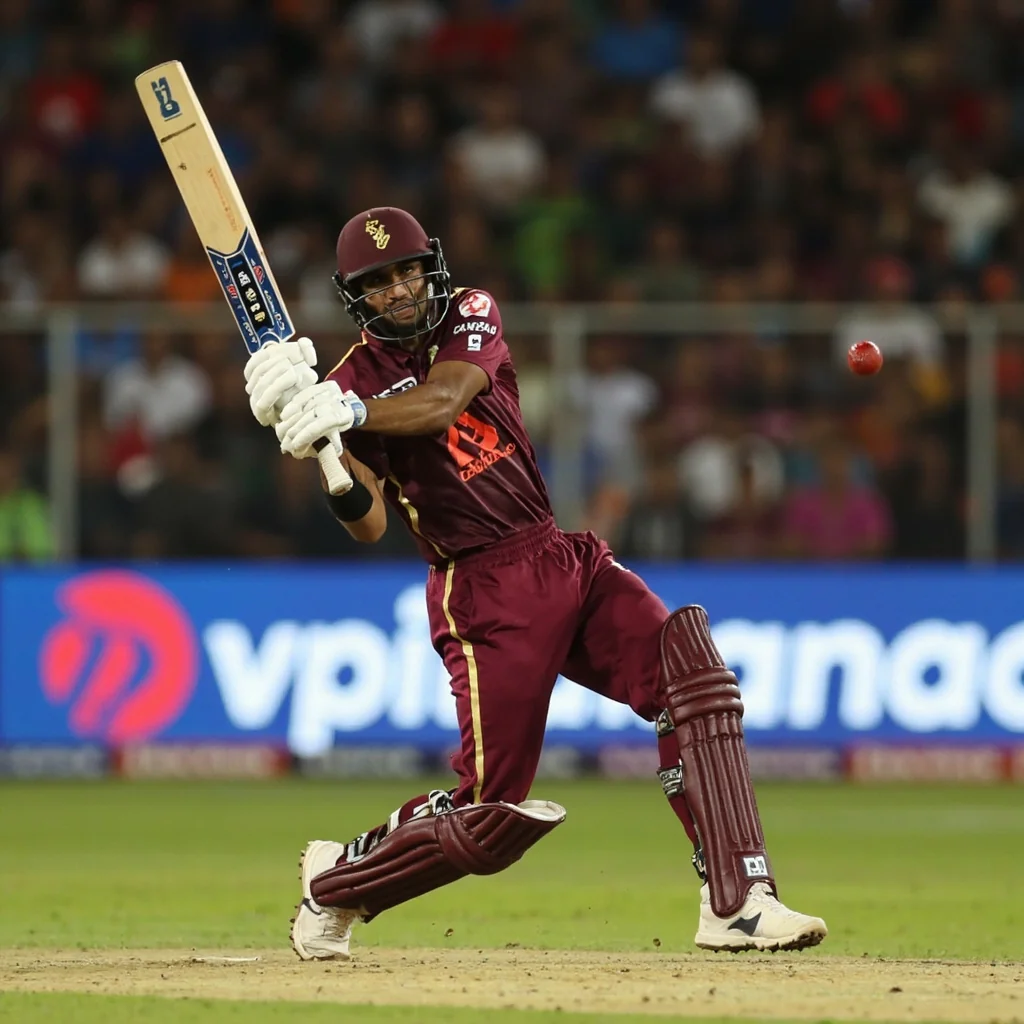
Example 1 — powerplay aggressor captain
Player scored 78 runs off 38 balls at strike rate 205, with 9 fours and 3 sixes. Run points: 78. Boundary bonus: 9×4 = 36. Six bonus: 3×6 = 18. Strike-rate bonus (SR 205, below 50 runs scored = no, SR is above 150 so +4): +4. Total = 78 + 36 + 18 + 4 = 136 fantasy points. Capped by captain: 272 points. That is the powerplay aggressor ceiling.

Strike rate scoring tiers explained
Example 2 — middle-overs anchor captain
Player scored 56 runs off 49 balls at strike rate 114, with 4 fours and 1 six. Run points: 56. Boundary bonus: 16. Six bonus: 6. Strike-rate bonus: SR 114 is between 70-90 so no penalty but also no bonus. Milestone: 50 runs scored, +4. Total = 56 + 16 + 6 + 4 = 82 fantasy points. Capped by captain: 164 points. That is the anchor ceiling.

Economy tier bonus structure
Example 3 — death-overs finisher captain
Player scored 48 runs off 21 balls at strike rate 228, with 4 fours and 3 sixes. Run points: 48. Boundary bonus: 16. Six bonus: 18. Strike-rate bonus (SR 228, +6). No half-century. Total = 48 + 16 + 18 + 6 = 88. Add captain: 176. If they also take 1 catch (8 points) and the team wins by 30 runs, the bowler's economy is irrelevant. Total capped = 184. That is the finisher ceiling.
Powerplay scoring with 4 boundary + 4 six bonus
Example 4 — spin all-rounder captain
Player scored 32 runs off 22 balls + took 3 wickets + 1 catch. Run points 32. Boundary bonus 8 (2 fours). Six bonus 6 (1 six). No SR bonus. Wickets 3×25 = 75. Bowler strike-rate (3 wickets in 24 balls = SR 8): below 25, +8. Economy rate (32 runs in 4 overs = 8 RPO): no bonus, no penalty. 1 catch = 8. Total = 32 + 8 + 6 + 75 + 8 + 8 = 137. Capped: 274. That is the spin all-rounder ceiling.
Example 5 — frontline pace bowler captain
Player took 4 wickets for 28 runs in 4 overs + scored 4 runs. Wickets 4×25 = 100. Bowling SR (4 in 24 balls = SR 6): below 25, +8. Economy rate (7 RPO): no bonus. Run points 4. 4. Total = 100 + 8 + 4 = 112. Capped: 224. That is the pace-bowler ceiling on a bowling-friendly track.
Example 6 — wicket-keeper batsman
Player scored 41 runs + 2 catches + 1 stumping. Run points 41. Boundary bonus 8 (2 fours). No six. Milestone: 40 not 50, no bonus. SR 130: between 130-150: +2. Catches 2×8 = 16. Stumping 12. Total = 41 + 8 + 2 + 16 + 12 = 79. Capped: 158. That is the wicket-keeper ceiling.
How to use the worked examples
For each captain candidate, estimate their scoring shape from past matches. Plug in the runs, boundaries, sixes, wickets, catches. If the ceiling is below 100 you should not captain them in a mega contest unless ownership is below 10%. If the ceiling is 100+, captain them in the right role.
The ceiling, the floor, and the expected
Three numbers matter: ceiling (top 10% of past matches), floor (bottom 10% of past matches), expected (median). A 130 ceiling / 80 floor / 100 expected player is a strong captain if ownership is below 15%. A 200 ceiling / 30 floor / 80 expected player is a differential captain — swings wildly. Match the captain to your contest risk tier.
The hidden points lines
Three points lines are easy to miss. The wicket-keeper stumping bonus (12 vs 8 for catch) — keep a wicket-keeper on benches and rotate in matches with 2+ expected stumpings. The maiden-over bonus on slow tracks (+4 + 6 dot balls = 10 points) — captain frontline spinners on slow tracks. The run-out direct-hit bonus (12) for fielder-captain — captain your best fielder when the opposition is fragile in the running.
Tactical takeaways
Powerplay aggressor ceiling: 270 (capped). Spin all-rounder ceiling: 270 (capped). Death-overs finisher ceiling: 200 (capped). Pace bowler ceiling: 220 (capped). Anchor ceiling: 165 (capped). The two highest ceilings are the powerplay aggressor and the spin all-rounder; these are the differential captain candidates when ownership is below 12%.
Final word on points
The points table is the only objective layer of the game. Everything else (form, matchup, pitch) is a multiplier. If you cannot reason from the points table, you cannot make the captain pick durable across 70 matches. Use the worked examples above to check your reasoning before the next contest.
What is the highest fantasy ceiling in IPL?
A powerplay aggressor with 3 sixes + 9 fours can score 270+ as captain. Spin all-rounders on turning tracks match that ceiling.
How much do dot balls really matter?
Each dot ball is +1 fantasy point. A 4-over spell with 14 dot balls earns 14 points. Combined with maiden-over bonus, dot balls are quietly worth 25-30 fantasy points in a typical match.
Is the wicket bonus worth the captain pick?
Yes on bowling-friendly tracks. A 4-wicket haul is 100-120 wicket-related points before any captaincy multiplier — that is the highest single-event payoff in the format.
How do I estimate the expected points for a player?
Take the median of their last 8 innings/match scores. That is the expected. The 90th-percentile match is the ceiling; the 10th-percentile match is the floor.